Upgrading knob and tube wiring gives you grounded circuits, modern insulation that does not crumble, and enclosed junction boxes, which lowers fire risk and stops stray current from traveling through appliance casings or people. It also keeps many insurance carriers from declining or excluding coverage, and removes a common objection buyers raise after a home inspection.
Knob and tube wiring was common in American homes built before the 1950s and was never designed for modern electrical loads.
Any knob and tube wiring that is damaged, buried in insulation, or serving modern appliances should be replaced.
A typical whole-house rewire takes several days to a few weeks, depending on home size, wall access, and panel work.
In Virginia, electrical work is permitted and inspected locally under the Virginia Uniform Statewide Building Code.
Skipping the permit is the most common mistake we see and can void insurance coverage and stall a future sale.
Still have knob and tube wiring in your home?Moser Electric assesses, permits, and replaces aging wiring for Moneta and Lynchburg area homes.
Why Knob and Tube Wiring Poses Real Risks for Homeowners
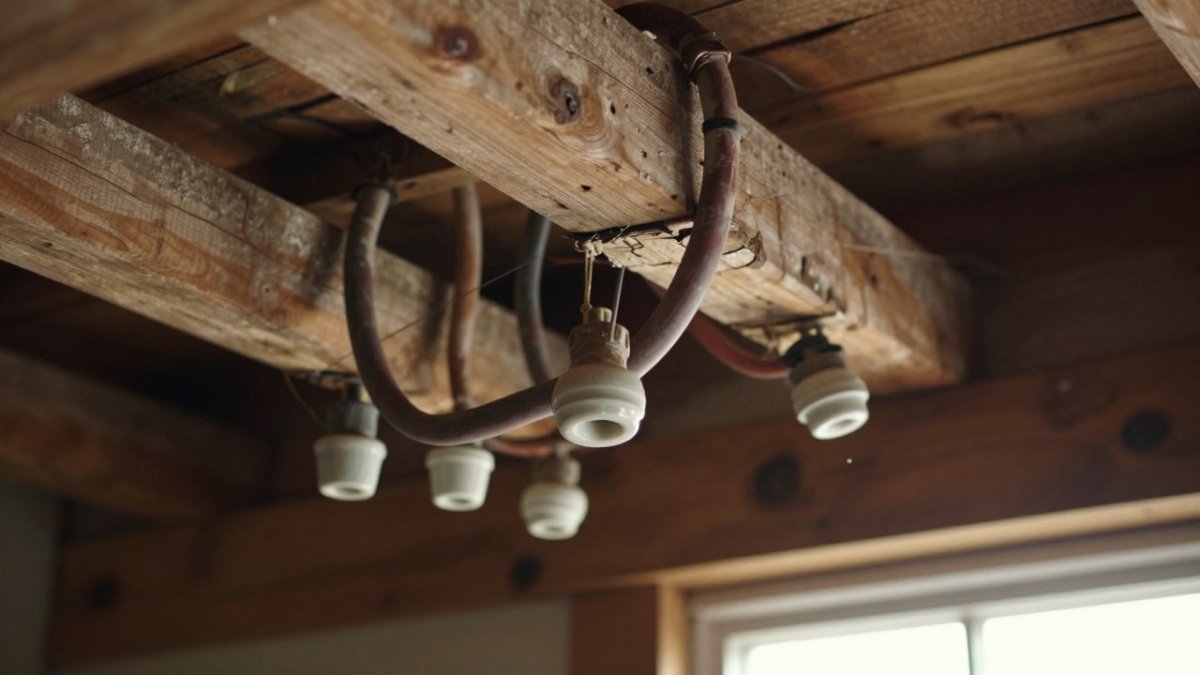
Knob and tube wiring is an early electrical system that ran single insulated conductors through ceramic tubes and across porcelain knobs inside wall cavities, attic spaces, and crawl spaces.
Knob and tube wiring is still active behind the plaster in many older homes, and it was not built for the loads a modern household places on it.
The risks come down to three things:
Brittle insulation. The cloth and rubber covering on old wiring dries out and cracks with age. Once it fails, bare conductors sit inside a wooden wall cavity.
Open splices. Knob and tube circuits were often spliced outside a junction box, leaving connections exposed where insulation was blown or packed around them.
No ground wire. An ungrounded circuit has no path to safely carry stray current away, which is a real problem for modern appliances that expect a ground.
That last point matters more than most homeowners realize. Ungrounded circuits and aging insulation are exactly the combination that makes insurance carriers and home inspectors take notice.
Aged knob and tube wiring with cracked, brittle insulation and ceramic knobs installed in a wooden attic.
If you are already seeing flickering lights, warm outlet covers, or a breaker that trips on the same circuit, those are signs worth acting on. Our team handles electrical repairs for exactly these hazards, and an assessment is the fastest way to know what you are dealing with.
Do You Need to Replace Knob and Tube Wiring?
You do not always have to replace every inch of it, but any knob and tube wiring that is damaged, buried in insulation, or serving modern appliances should be replaced.
Here is how we sort it out on an assessment:
Trace the active circuits. Some older homes have knob and tube that was abandoned years ago and no longer carries current. Dead wiring is a different conversation than live wiring.
Check the insulation condition. Wiring that crumbles when touched is a replace-now item. Wiring that is intact and accessible may be monitored.
Look at what it feeds. A circuit running a bedroom lamp is lower risk than one feeding a kitchen or a garage with power tools.
Check for insulation contact. If attic insulation or crawl-space insulation was added over the wiring, that is a fire risk and a code concern.
A useful way to frame the decision is to separate three outcomes: leave it alone, replace a targeted circuit, or plan a full rewire. Leaving it alone is only defensible when the wiring is confirmed dead or when a licensed electrician has inspected it and found it intact, accessible, and not in contact with insulation. Targeted replacement can make sense when one circuit feeds a modern load, such as a kitchen, laundry, or heat pump, and the rest of the system is in good condition. A full rewire is usually the right call when the wiring is live throughout the house, when insulation has been added over it, when there are open splices, or when the panel cannot support the circuits a modern household needs.
The thing nobody tells you about knob and tube is that partial replacement often creates more questions than it answers.
In Virginia, electrical work is permitted and inspected at the local level, and the applicable code is the Virginia Uniform Statewide Building Code, which adopts the National Electrical Code with state amendments.
Watch out: do not assume that because the wiring is old it is automatically unsafe, and do not assume that because it still works it is fine.
The Safety and Insurance Benefits of Upgrading Knob and Tube Wiring
The biggest benefit of upgrading is not resale value. It is that you stop worrying about what is happening inside your walls while you sleep.
Modern wiring brings a grounding conductor to every outlet, which gives stray current a safe path back to the panel instead of through an appliance casing or a person.
Then there is insurance. Many carriers now ask detailed questions about wiring age during underwriting, and some decline to cover homes with active knob and tube. Others will cover the home but exclude claims tied to the old wiring.
The home-sale side is just as practical. A buyer’s home inspection almost always flags knob and tube, and that flag becomes a negotiation. Replacing it before you list can remove a common objection from buyers.
Knob and Tube vs. Modern Wiring: Pros and Cons
Modern wiring generally offers advantages in safety, capacity, and insurability compared with knob and tube.
Factor
Knob and Tube Wiring
Modern Wiring
Grounding
No ground wire
Grounded circuits
Insulation
Cloth and rubber, brittle with age
Durable modern insulation
Electrical capacity
Limited, often overloaded
Sized for modern electrical load
Insurance
Frequently excluded or surcharged
Standard coverage
Home inspection
Almost always flagged
Expected standard
Junction boxes
Open splices common
Enclosed connections
The one honest argument for keeping it is cost avoidance, and that argument only holds while the wiring is intact and untouched. Once insulation is disturbed or a circuit is added, the calculation flips.
A knob and tube upgrade often comes with a panel upgrade, because the old breaker panel may not have the capacity or the open slots a modern circuit layout needs. If you want the full picture on that side of the project, our breakdown of electrical panel upgrade costs, signs, and timelines covers what to expect.
What the Whole-House Rewire Process Involves
A whole-house rewire replaces the old conductors, adds grounded circuits, and brings the electrical service up to current standards. It is a planned sequence, not a demolition project.
Here is how the process runs:
Assessment and plan. We map every circuit, identify what stays and what goes, and set the scope with you before any wall is opened.
Permit. An electrical permit is required for this work, and the local building code authority inspects it. We pull it and schedule the inspection.
Panel and service work. If the service panel needs replacing, that happens early so the new circuits have somewhere to land.
Running new wire. New circuits are pulled through wall access points, attic, and crawl space. Expect some patching.
Removing old wiring. Old conductors are pulled where accessible and disconnected where they are not.
Devices and trim-out. Outlets, switches, and fixtures go in, then the system is tested circuit by circuit.
Final inspection. The inspector signs off, and we walk the house with you.
Watch out: skipping the permit to save time is the single most common mistake we see, and it can void insurance coverage and stall a future sale.
How Long Does It Take to Replace Knob and Tube Wiring?
A typical whole-house rewire takes several days to a few weeks, depending on the size of the home, how much wall access is needed, and whether the panel is being replaced at the same time. There is no single number that fits every house.
What stretches the timeline:
Wall access. Plaster walls and finished ceilings take longer to open and restore than drywall.
Occupancy. An occupied home means working around furniture and daily life. A vacant home moves faster.
Scope. Replacing a few circuits is quick. A full-home rewire with a service change is a multi-week project.
Inspection scheduling. The permit inspection has to happen before the system is closed up.
For a business, the answer is different again. Commercial spaces can often be phased so that part of the building stays open while we work through the rest. We plan that schedule with the owner before the first day on site, because a shutdown that was never discussed is the fastest way to lose a tenant.
Replacing Knob and Tube Wiring Cost: What Drives the Price
Pricing depends on scope, access, and the condition of what we find once the walls are open. Any contractor who quotes a firm number over the phone, before seeing the house, is guessing.
The cost drivers are consistent:
Square footage and circuit count. More rooms and more circuits mean more wire and more labor.
Panel and service. A panel upgrade or service change adds scope.
Restoration. Patching and painting after the wiring is done is part of the real budget.
What we find. Aluminum branch wiring, previous DIY splices, or water damage change the plan.
To make that concrete, think in terms of the pieces a homeowner is actually paying for. The wiring itself is a modest material cost; the labor to fish new cable through finished walls, attics, and crawl spaces is the larger share.
We do not publish a flat rate because we would be inventing it, and a number that is not tied to your house is not useful. For a real number, our guide to what it costs to rewire a house walks through the factors in detail, and an on-site assessment gives you a written scope.
Watch out: a quote that is dramatically lower than the others usually means the restoration, the permit, or the panel work has been left out, and those costs do not disappear once the walls are open.
Request a Knob and Tube Wiring Assessment in Moneta
If your home was built before 1950 and still has knob and tube wiring, an assessment is the right first step. It tells you what is live, what is safe, and what should come out.
Moser Electric has over 21 years of experience serving residential and commercial properties. Our electricians are trained and skilled, and we are committed to being a respectful, humble guest in your home or business.
Whether you need a panel upgrade, a full rewire, or an assessment of the wiring behind your walls, we aim to offer recommendations tailored to your needs, and you have the final word on your electrical solutions.
Aging wiring does not fix itself, and the longer it stays in place, the more it limits your insurance options and your resale value.
Frequently Asked Questions
Is it worth replacing knob and tube wiring?
Yes, in most cases. Knob and tube wiring lacks a ground wire, and its brittle insulation can crack and expose live conductors. Upgrading improves electrical safety, supports modern appliances, and can make insurance easier to obtain. A licensed electrician can assess your home’s wiring condition and tell you whether a partial or full-home rewire makes sense.
Is it illegal to sell a house with knob and tube wiring?
No federal law bans selling a home with knob and tube wiring, but Virginia building codes and lender requirements often affect the sale. Many insurers refuse to cover homes with active knob and tube circuits, and buyers may request repairs during inspection. A home inspection typically flags the wiring, so sellers should expect negotiations. An electrical inspection before listing helps you plan.
How much does it cost to upgrade a house from knob and tube wiring?
Costs vary widely based on square footage, wall access, circuit count, and whether the electrical panel needs an upgrade. Replacing knob-and-tube wiring cost depends on these factors, and pricing is best confirmed with an on-site assessment. For current pricing or a quote for your property, visit the Moser Electric website.
How long does it take to replace knob and tube wiring?
A whole-house rewire typically takes several days to a few weeks, depending on home size, accessibility, and whether drywall repairs are needed. Smaller homes may finish in under a week, while larger properties with finished walls take longer. Your electrician can give a timeline after inspecting the attic, crawl space, and wall access. Plan for some disruption during the project.
We use cookies to ensure that we give you the best experience on our website. If you continue to use this site we will assume that you are happy with it.