The biggest single factor in home EV charger installation cost is the distance from your electrical panel to where the charger goes. Labor, permits, and any panel upgrades add to that base. For most Moneta, VA homeowners, the final number lands somewhere between a simple outlet swap and a full service upgrade.
At Moser Electric, we’ve wired enough homes in this region to know the pattern. The charger itself is rarely the expensive part. The wiring path is.
A home EV charger installation cost is the total you pay for the unit, the labor, the permit, and any electrical work needed to make it safe. That last piece is where surprises live.
Here is what actually moves the price:
Cable run length from panel to parking spot
Panel capacity and whether it needs an upgrade
Permit fees set by your local jurisdiction
Wall type (finished drywall costs more to open and patch than an unfinished garage)
Labor is charged by the hour or as a flat job rate. A short, easy run in an open garage takes far less time than a long run through finished walls.
Permits vary by county and city. In our area, you’ll need an electrical permit before work starts. Skipping it can void insurance and cause problems at resale.
Distance is the wildcard. Every extra foot of cable means more material and more time. A panel on the far side of the house from the garage can double the labor.
Pro Tip Measure the actual path, not the straight line. Cable has to route around corners, through joists, and behind drywall. A 20-foot straight-line run can easily become 60 feet of real cable.
Level 2 EV Charger Installation Cost Breakdown
A Level 2 EV charger installation cost breaks into four parts: the unit, the wiring and labor, the permit, and any panel work. Most homeowners can estimate the first three. The fourth is the one that changes everything.
Level 2 chargers run on a 240-volt circuit, the same as an electric dryer or range. That higher voltage is what cuts charge time from overnight-plus to a few hours.
Here’s how the pieces stack up:
Cost Component
What It Covers
What Changes It
Charger unit
The wall-mounted device
Brand, amperage, smart features
Wiring and labor
Cable, conduit, breaker, electrician time
Run length, wall type, access
Permit
Local inspection and approval
Your city or county fee schedule
Panel work
Upgrade or new circuit
Available capacity, panel age
Pricing depends on your specific setup, so we quote each job after seeing the panel and the parking spot. You can request a quote from Moser Electric for your exact situation.
Hardwired vs. Plug-In Chargers
Hardwired chargers connect straight to the circuit. Plug-in models use a NEMA 14-50 outlet, like a heavy-duty appliance plug.
Hardwired units usually cost a bit more upfront but allow higher amperage and faster charging. Plug-in units are cheaper to install and easy to swap if you move.
Plug-in: lower install cost, portable, capped at outlet amperage
If you plan to stay put, hardwired often wins. If you rent or might move, plug-in makes more sense.
EV Charger Electrical Panel Upgrade Cost
An EV charger electrical panel upgrade cost depends on your current service size. Many older homes run 100-amp service. A Level 2 charger plus normal household load can push that past its limit.
A 200-amp upgrade means a new panel, new main breaker, and often a new service line from the meter. That’s a bigger job than the charger itself.
Signs you may need an upgrade:
Panel is full with no open breaker slots
Service is 100 amps or less
Fuse box instead of breakers
Frequent tripping when large appliances run
We handle panel upgrades and charger installs as one project, so you’re not juggling two contractors. Our team has over 21 years of experience with residential electrical work in this region.
Watch Out Never let anyone install a charger on a panel that can’t carry the load. Overloaded panels run hot and can fail. The fix costs far more than doing the upgrade correctly the first time.
Level 2 EV Charger Installation Time
Most Level 2 EV charger installation time runs two to four hours for a straightforward job. Add time for long cable runs, wall fishing, or a panel upgrade.
A simple garage install with the panel nearby can finish in a single morning. A complex run through finished space, or a service upgrade, can stretch to a full day or more.
What adds time:
Opening and patching finished walls
Routing cable through a crawlspace or attic
Panel upgrade or new service line
Waiting on inspection scheduling
We give you a realistic window before we start, not a best-case guess. That way you can plan your day around it.
EV Charger Installation Quote Checklist
A good quote should be itemized, not a single lump sum. Ask for a breakdown before you sign anything.
Use this checklist when comparing quotes:
Is the charger unit included, or just the install?
Is the permit fee listed separately?
Is the cable run length stated in feet?
Does it note whether a panel upgrade is needed?
Is the breaker and conduit included?
Is there a written warranty on labor?
Is the electrician licensed and insured?
Is the inspection pass guaranteed?
Red flags: vague line items, no permit mention, or a price that seems too low to cover real materials.
Key Takeaway The lowest quote is rarely the cheapest. A price that skips the permit or the panel check just moves the cost to you later, often with a failed inspection attached.
Why Moneta and Roanoke Homeowners Pay More for Older Wiring
Older homes around Moneta and Roanoke often need more work than newer builds. Wiring from the 1960s and 1970s wasn’t designed for the loads a modern home pulls, let alone an EV charger.
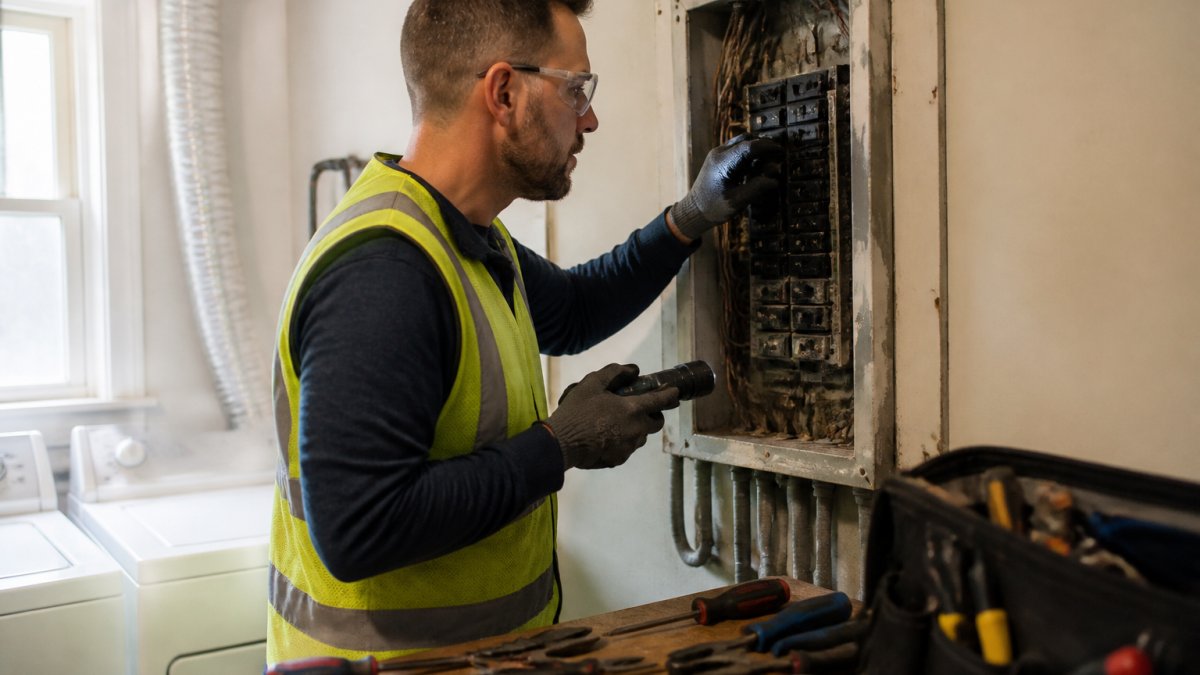
A licensed electrician in a safety vest and work gloves inspecting an older residential electrical panel inside a home utility room, with tools laid out on a nearby workbench
Common issues we find in older local homes:
Undersized service (100 amps or less)
Aluminum branch wiring in some builds
Panels with no spare breaker slots
Outdated grounding and bonding
Any of these can push a charger install into a larger project. That’s not a sales pitch. It’s what the wiring actually shows when we open the panel.
If you’re searching for EV charger installation near me in the Moneta area, ask any contractor to inspect your panel first. A quote without that step is a guess.
Conclusion
The real challenge with home EV charger installation cost isn’t the charger. It’s the wiring behind your walls, and that’s where a cheap quote can turn expensive.
Moser Electric brings over 21 years of experience to every job. We handle the full scope: panel upgrades, new circuits, and Level 2 charger installs, all under one roof. Our team treats your home like a guest would, with clean work and clear pricing.
Request service from Moser Electric and get a charger installed right the first time, with a quote that tells you the whole story before we start.
Frequently Asked Questions
How much does it cost to install a home EV charger?
There is no single figure, because home EV charger installation cost depends on your home’s wiring, the distance from your electrical panel to the charger location, and whether your panel can handle the added load. A straightforward install in a newer home with available capacity costs far less than one requiring a panel upgrade or a long cable run. Moser Electric provides written quotes after an on-site assessment, so you know the full scope before work begins.
Will I need an electrical panel upgrade to install a home EV charger?
Not always, but many homes built before the 1990s have 100-amp panels that cannot safely support a Level 2 charger alongside existing appliances. A load calculation determines whether your panel has spare capacity. If it does not, an EV charger electrical panel upgrade cost becomes part of your project. A licensed electrician can run that calculation during a site visit and explain your options clearly.
How long does it take to install a Level 2 EV charger?
A simple installation with an existing 240-volt circuit nearby can be completed in a few hours. If the electrician needs to run new conduit across a garage, install a new breaker, or upgrade the panel first, the job may take a full day or require a second visit. Level 2 EV charger installation time also depends on permit scheduling, which varies by locality in Virginia.
Are there tax credits or utility incentives for installing a home EV charger in Virginia?
Yes. The federal Alternative Fuel Vehicle Refueling Property Credit (30C) may cover a portion of charger and installation costs for eligible homeowners. Virginia utility providers sometimes offer additional rebates, though programs change. Ask your electrician for documentation of the installation cost so you can submit a complete claim, and confirm current eligibility with a tax professional.
We use cookies to ensure that we give you the best experience on our website. If you continue to use this site we will assume that you are happy with it.