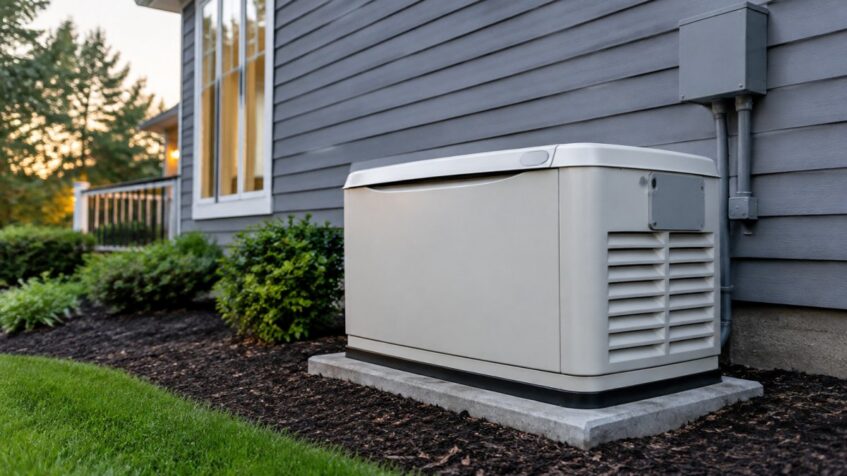
A whole home generator can be made quieter by placing it away from bedrooms and neighbors, isolating vibration with rubber pads, and keeping the factory muffler and exhaust in good condition. Any enclosure must preserve airflow, since blocking ventilation can overheat the unit and create fire risk.
Measure baseline noise in dBA at the property line and nearest bedroom window before changing anything.
Point exhaust and air intake away from living spaces, since sound travels in the direction openings face.
Use isolation pads rated for the unit’s full operating weight plus a safety margin.
Never enclose a generator in a space connected to a basement, crawlspace, or attached garage.
Call a licensed technician if the generator suddenly makes a new sound, since it may be mechanical.
Is your generator too loud for your home?Moser Electric checks placement, clearances, and maintenance for safer, quieter whole-home generators.
Why Whole-Home Generators Get So Loud and What Counts as Too Loud
A whole-home generator can be quieter than you think, but only if you understand where the noise comes from. To see how the power demand in your home affects how hard the unit works, read how electricity is distributed throughout a home.
Noise is measured in decibels, usually shown as dBA. A standby unit can sound quite loud when it runs under load. Quiet models are designed to produce less sound, and some manufacturers publish sound pressure levels for their units.
Here is what most people consider too loud:
Noise that wakes sleeping rooms at night
A hum that carries across the lot to neighbors
Vibration you can feel through walls or the ground
Sound that continues long after the outage ends
Remember that your local rules may set a limit. Local noise ordinances may cover generators, so check with the local office before you make big changes.
Start With Placement: Distance, Orientation, and Living Areas
Placement is often one of the simplest steps to take. Put the unit as far from bedrooms, living areas, and neighbors’ windows as your lot allows.
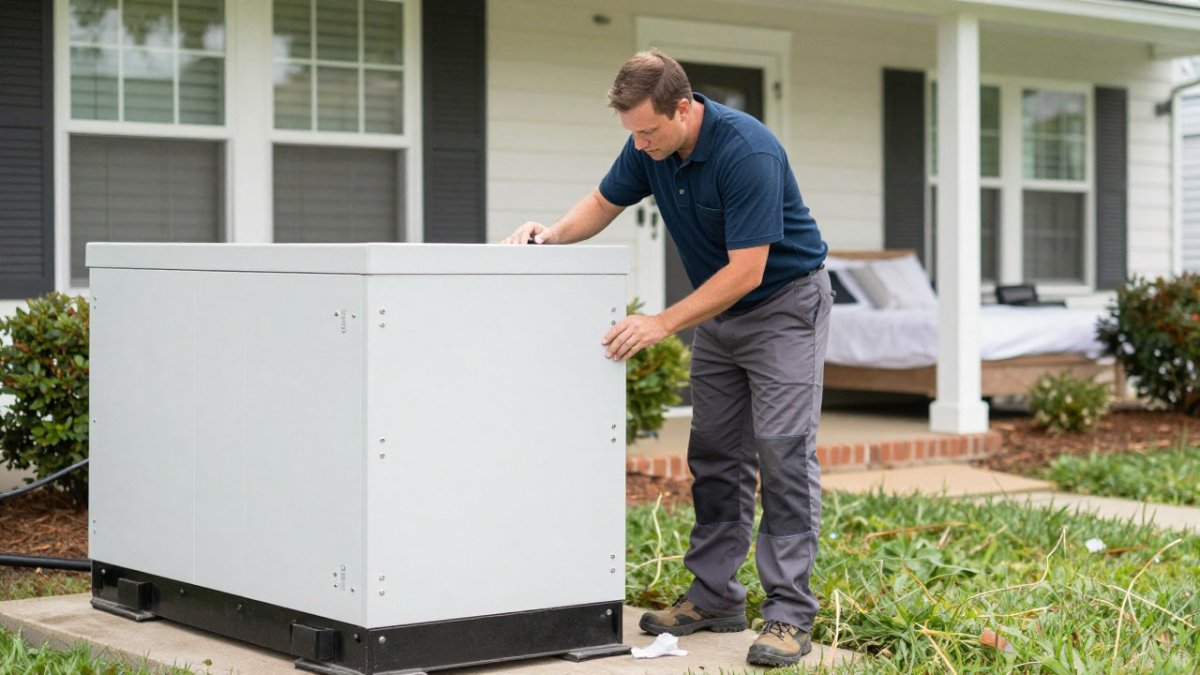
Electrician inspecting a whole home generator pad beside a suburban house near bedroom windows
Point the exhaust and the air intake away from living spaces.
Common placement mistakes include:
Setting the unit right beside a deck or patio
Placing it in a corner where walls reflect the sound back
Blocking the airflow with shrubs, sheds, or fences
Keep clearances set by the manufacturer. Blocking airflow can overheat the engine and create a fire risk, so never crowd the unit into a tight space.
DIY Whole Home Generator Noise Reduction That Stays Safe
Whole-home standby generators present different noise challenges than portable units. Standby units run automatically during outages and typically exercise on a schedule, so their noise can recur. Any DIY fix should be checked against both steady running noise and short exercise cycles.
Before changing anything, establish a baseline. Use a sound level meter to measure dBA at the property line, at the nearest bedroom window, and at a set distance from the unit. Take readings during an exercise cycle and under load if possible.
Vibration Isolation and Rubber Mounting Pads
Vibration travels through the concrete pad and into the ground, where it can re-radiate as low-frequency hum inside the house. Rubber isolation pads or spring isolators placed under the generator base can interrupt that path. Choose pads rated for the unit’s full operating weight plus a safety margin. Check that the pads remain level and do not compress unevenly. Inspect them each season for cracking or flattening, and re-torque the mounting bolts to the manufacturer’s specification.
Sound-Absorbing Panels and Acoustic Barriers
Acoustic panels and barriers work best when placed between the generator and the sensitive receiver, not wrapped around the unit. A solid fence or wall at least as tall as the generator, set back from the unit by the manufacturer’s clearance, can block line-of-sight sound. Mass-loaded vinyl or outdoor-rated acoustic blankets hung on a frame can absorb mid- and high-frequency noise, but they do little for low-frequency engine rumble. Position barriers so they do not reflect sound toward a neighbor or trap heat around the unit.
Exhaust and Muffler Considerations
Most whole-home generators come with a factory muffler and enclosure designed to meet a published sound rating. Replacing or modifying the exhaust can void the warranty and may violate local code. If the muffler is rusted or leaking, replace it with the manufacturer’s specified part rather than a generic automotive muffler. A leaking exhaust is both louder and a carbon monoxide hazard.
Maintenance Steps That Keep Noise Down
A dirty air filter, loose belt, or worn spark plug can make a generator run louder and less efficiently. Follow the owner’s manual schedule for oil changes, filter replacement, and valve adjustment. During each weekly exercise cycle, listen for new sounds: a rhythmic knock, a whistle, or a sudden roar. Treat any change in sound as a reason to call a licensed technician, because it may indicate a mechanical problem rather than a noise problem.
What DIY Cannot Fix
Some noise problems are inherent to the unit’s design, its location, or its installation. If the generator sits on a poorly compacted pad, if the transfer switch or wiring was installed without proper clearance, or if the unit is simply too close to a property line, no amount of pads or panels will fully solve the issue.
The article breaks the main DIY noise fixes into a few categories, each with its own tradeoffs.
Fix
Main benefit
Key caution
Vibration isolation pads
Interrupts vibration through the pad
Over-tightening bolts defeats the isolators
Acoustic panels and barriers
Blocks line-of-sight sound
Must not block intake or exhaust openings
Factory muffler or exhaust
Meets published sound rating
Aftermarket changes can void warranty
Regular maintenance
Keeps unit running smoothly
Any sudden new sound needs a technician
Soundproof Generator Box DIY: Ventilation and Fire Safety Limits
A soundproof generator box is the most dangerous DIY noise fix a homeowner can attempt on a whole-home standby unit. Unlike a portable generator that runs occasionally outdoors, a standby unit runs under heavy load for hours or days during an outage and produces substantial heat. Enclosing it without engineered airflow can cause overheating, component failure, and in the worst case a fire.
Why Whole-Home Units Are Different
A 20 kW standby generator dissipates several kilowatts of heat through its enclosure and exhaust. Factory housings are designed with intake and exhaust openings, airflow, and clearance distances to manage heat. Any added enclosure must preserve or improve that airflow, not restrict it. Portable generator boxes sold online are typically sized for small units and are not rated for the continuous heat load of a whole-home system. Using one on a standby unit is a common and serious mistake.
Minimum Ventilation Requirements
There is no universal formula, but most manufacturers specify minimum clearance on all sides, often 18 to 36 inches, and require that intake and exhaust air paths remain unobstructed. An enclosure must have open intake and exhaust areas at least as large as the generator’s own louver area, and the air path must not recirculate hot exhaust back into the intake. Baffles can reduce noise but increase airflow resistance, so any baffle design must be verified against the unit’s cooling requirements.
Fire Safety and Carbon Monoxide
Generator exhaust contains carbon monoxide, and an enclosure can allow CO to accumulate near the unit and migrate toward the house. Never enclose a generator in a space connected to a basement, crawlspace, or attached garage. Install CO alarms both near the generator and inside the home, and test them monthly. Keep combustible materials, including mulch, firewood, and stored fuel, well away from the enclosure.
What a Safe Enclosure Looks Like
A safe acoustic enclosure for a whole-home generator is typically a professionally engineered structure with a defined air path, fire-rated materials, and a design that has been reviewed against the generator manufacturer’s installation manual. Some manufacturers offer factory-approved acoustic enclosures or sound kits; ask your installer whether one is available for your model. If you want the noise reduction of a box without the risk, ask your installer whether a factory acoustic enclosure or a manufacturer-approved sound attenuation kit is available for your model.
When to Stop and Call a Professional
If you have already built or bought a box and the generator is running hotter than usual, shutting down unexpectedly, or producing a different exhaust smell, stop using the enclosure and have the installation inspected. A licensed electrician or generator technician can measure airflow and temperature, confirm clearances, and recommend a safe alternative. Local officials can advise on permit requirements and noise rules that apply to your property.
Generac Whole Home Generator Noise Reduction Options Compared to Other Providers
Different providers offer different sound ratings, enclosure designs, and accessories. When you compare options, look at the published decibel rating, the enclosure type, and the warranty terms.
Ask each one for the exact sound rating at a set distance, since numbers from different brands are only fair to compare when measured the same way.
Some useful questions to ask:
What is the sound level at 23 feet under load?
Does the enclosure come from the manufacturer?
Does the warranty cover accessories added later?
Best Whole Home Generator Noise Reduction: Muffler, Exhaust, and Maintenance Steps
Good maintenance helps a generator run smoothly. Follow the maintenance schedule in the owner’s manual.
Here are steps that help:
Inspect the muffler and exhaust for leaks or rust each season.
Replace or clean the air filter as the manual directs.
Check the mounting pads and bolts for wear.
Run a test under load and note any new noise.
Call a licensed technician if the sound changes suddenly.
A leak in the exhaust is dangerous as well as loud, so treat any change in sound as a warning sign.
Booking a Professional Assessment in Moneta, VA
If your generator is still too loud after placement and maintenance, a professional assessment can find the cause. A licensed electrician can check the installation and related wiring.
Contact Moser Electric to ask about a site visit before any work starts.
Frequently Asked Questions
How loud is a 72-decibel generator?
A 72 dBA generator is roughly as loud as a normal conversation or a running dishwasher at a few feet away. Whole-home standby units are often rated around this level at 23 feet under load. Sound drops as you move farther away, and walls, enclosures and placement can reduce what reaches living spaces. Compare the manufacturer’s dBA rating at a stated distance before deciding how much mitigation you need, and remember that a rating at full load is usually louder than the unit sounds during a weekly self-test.
Can a generator sound enclosure reduce noise safely?
Yes, if it is designed around airflow. A generator needs large volumes of cooling and combustion air, and an enclosure that traps exhaust heat can cause overheating, shutdowns or fire risk. Any enclosure should keep the manufacturer’s clearances, include intake and exhaust paths sized for the unit, and avoid blocking the exhaust outlet. Factory-approved sound enclosures are one option to consider over homemade boxes for this reason, and a licensed electrician or the generator dealer can confirm clearances before work starts.
When should I call an electrician about excessive generator noise?
Call a licensed electrician if the generator runs louder than its rated level, vibrates the house, shows signs of loose mounting, or if you suspect an electrical fault such as a transfer switch problem or a wiring issue behind the noise. Noise that changes suddenly often points to a mechanical or electrical problem rather than a sound issue. Contact Moser Electric directly for a quote and current details on pricing and availability.
Does the generator’s location affect how loud it sounds inside the house?
Yes. A generator placed close to bedroom windows, under eaves or in a corner between two walls can sound much louder indoors than one placed on the far side of the property. Keeping the unit as far from living areas as your installation and local setback rules allow, facing the exhaust away from windows, and mounting it on a level pad usually makes the biggest difference. Placement changes are often the cheapest noise reduction step available.
We use cookies to ensure that we give you the best experience on our website. If you continue to use this site we will assume that you are happy with it.