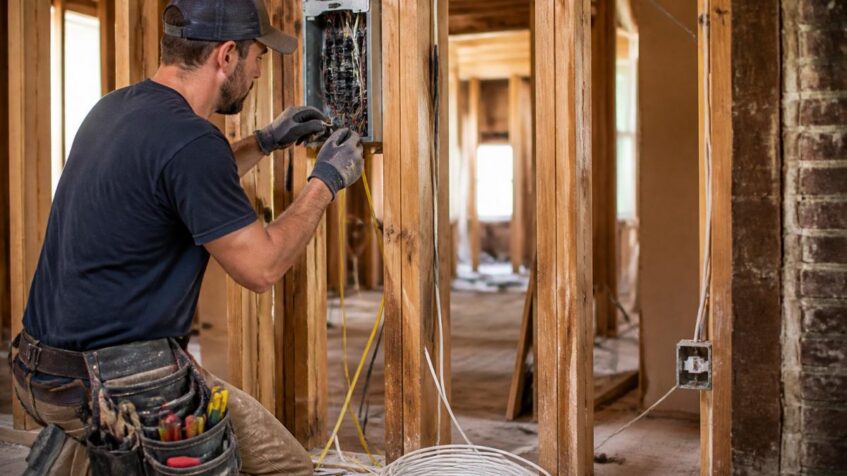
The cost to rewire a house depends on three things: the size of your home, the condition of the existing wiring, and how hard it is to reach that wiring once work begins. No two homes price out the same way, which is why we never quote a rewiring job over the phone.
At Moser Electric, we’ve spent over 21 years working on older properties around Moneta, VA and the surrounding region. Here’s the honest truth: the biggest cost driver isn’t the wire itself. It’s labor, access, and what we find behind the walls.
Rewiring a house means replacing the old electrical wiring and related components with new, code-compliant materials. It’s one of the most labor-intensive electrical jobs a homeowner can face.
So what actually moves the number up or down?
House Size and Layout
Square footage sets the baseline. More rooms mean more outlets, switches, and fixtures to wire.
A small, open floor plan is faster to wire than a large home chopped into many small rooms. Every wall, closet, and finished ceiling adds labor hours.
Square footage: more space, more materials and time
Number of rooms: each one needs its own circuits and outlets
Stories: second floors and basements add access challenges
Finished spaces: drywall and plaster have to be opened and patched
Wiring Type, Age, and Accessibility
Old wiring is the wild card. Knob-and-tube, aluminum, or cloth-insulated wire all take longer to remove and replace safely.
Access matters just as much. Wiring that runs through an open attic or unfinished basement is quick to reach. Wiring buried under plaster or behind finished walls is not.
Watch Out Homes built before 1978 may contain asbestos in old insulation or wire coatings. Disturbing it without proper handling is a health hazard and can add significant cost to your project. Always have materials tested before demolition begins.
Signs a House Needs Rewiring
Most homes need rewiring when wiring is outdated, damaged, or simply can’t keep up with modern electrical demand. The signs usually show up long before a full failure.
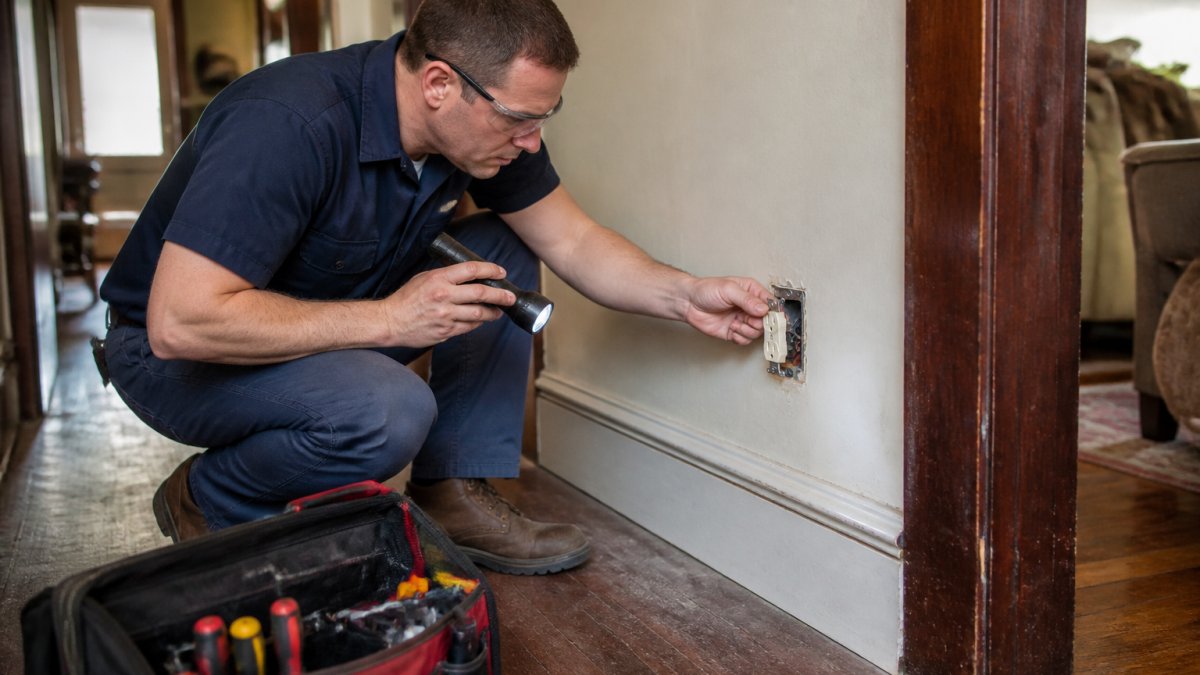
A licensed electrician in work clothes and safety glasses examining an open electrical outlet in an older home, flashlight in hand, with a toolbox resting on the floor nearby
Watch for these warning signs:
Fuses that blow or breakers that trip often
Warm, discolored, or scorched outlet covers
A burning smell near outlets or the panel
Buzzing or crackling sounds from switches
Two-prong outlets with no ground
Lights that flicker when appliances kick on
Fabric-covered or aluminum wiring
If you spot any of these, call a licensed electrician for an inspection. Some problems are cheap to fix. Others mean the whole system is past its useful life.
For homeowners wondering “is there an electrician near me,” Moser Electric serves Moneta and the greater Roanoke and Lynchburg areas.
How Long Does It Take to Rewire a House?
Most full house rewires take one to two weeks, though larger or older homes can run longer. The timeline depends on size, access, and how much repair work follows the electrical work.
A typical schedule breaks down like this:
Phase
What Happens
Typical Time
Assessment
Inspection and scope of work
1 day
Rough-in
Running new wire through walls
3-7 days
Panel work
Upgrading or replacing the panel
1 day
Finishing
Outlets, switches, fixtures
2-3 days
Inspection
Permit sign-off
1 day
The thing nobody tells you about rewiring is that the electrical work is often the easy part. Patching drywall and repainting can stretch the total project well beyond the wiring itself.
If you need to stay in the home during the work, plan around partial power outages. We schedule those in stages to keep the disruption manageable.
Electrical Permit Requirements in Bedford County, VA
A permit is almost always required before rewiring a house in Bedford County, VA. Electrical work of this scale must be inspected to meet current code.
The permit process usually looks like this:
Apply for the electrical permit before work starts
Pay the required permit fee
Complete the rough-in and request a rough inspection
Finish the work and request a final inspection
Receive sign-off before the job is considered complete
Skipping the permit is a bad idea. Unpermitted work can fail a future home inspection, complicate a sale, and leave you liable for code violations.
Pro Tip Ask your electrician for the permit number before work begins. A contractor who hesitates to pull a permit is a red flag. Reputable electricians welcome inspections because they prove the work was done right.
For current fees and forms, check with Bedford County’s permitting office directly. Requirements can change, so confirm the details before you start.
How to Budget for a House Rewire Without Surprise Charges
The best way to avoid surprise charges is to get a written, itemized estimate before work begins. A vague quote is where budgets fall apart.
Here’s how we’d approach it:
Ask for a line-item estimate, not a lump sum
Confirm what’s included: permits, patching, and cleanup
Ask how change orders are priced and approved
Set aside a contingency for hidden problems
Get the warranty and guarantee in writing
Check references and license documentation
That contingency matters. Old homes hide surprises behind the walls, and a good contractor will flag them before charging you for them.
Key Takeaway The most reliable way to control cost is a detailed written estimate plus a clear change-order process. That combination protects you from the surprise charges that give electrical work a bad reputation.
Because we don’t publish flat prices, we recommend requesting a quote based on your specific home. Pricing depends on size, age, and access, so a walkthrough is the only way to give you a real number.
Frequently Asked Questions
How do I know if my house needs to be rewired?
Look for warning signs: outlets that feel warm, fuses that blow repeatedly, a faint burning smell near switches, flickering lights, or two-prong outlets with no ground. If your home still has knob-and-tube or aluminum wiring, that alone is a strong indicator. An electrician can inspect the panel and a few outlets to confirm whether a full rewire is needed or just a partial fix.
Do I need a permit to rewire my house in Virginia?
Yes. Virginia adopts the Uniform Statewide Building Code, and most localities require an electrical permit before any rewiring work begins. In Bedford County, homeowners should check with the county’s building inspections office before scheduling work. A licensed electrician typically pulls the permit and arranges the inspection. Skipping the permit can complicate insurance claims and resale later.
Can you rewire a house without removing all the drywall?
In many cases, yes. Electricians often fish new cable through existing wall cavities using access holes at outlets, switches, and the attic or crawlspace. Some drywall patching is usually still needed, but a full tear-out is rarely required. Homes with plaster walls, brick, or limited attic access may need more invasive work, which affects both the timeline and the cost.
How long does it take to rewire a house?
A typical single-family home takes about one to two weeks for a full rewire, though larger homes or those with hard-to-reach wiring can take longer. Homes that are occupied during the work often take longer because electricians work around furniture and daily routines. A written schedule from your contractor should outline the phases, inspections, and expected completion date.
Rewiring an older home is a big decision, and the uncertainty around cost is the hardest part. Moser Electric takes the guesswork out of it with clear, itemized estimates, full permit support, and a team that treats your home with respect. With over 21 years of experience and a focus on cost-efficient, reliable service, we handle everything from the first walkthrough to the final inspection. Request service with Moser Electric and get a rewiring plan built around your home and your budget.
We use cookies to ensure that we give you the best experience on our website. If you continue to use this site we will assume that you are happy with it.