What to Expect From Whole Home Generator Installation
A whole home generator installation is a significant electrical project that powers your entire house during outages. Unlike portable generators, standby units connect directly to your home’s electrical system and fuel supply. They activate automatically when power fails, keeping lights, heating, and appliances running without interruption.
The installation process typically spans several weeks from initial assessment to final inspection. You’ll work with a licensed electrician to evaluate your home’s power needs, select an appropriate unit, prepare the installation site, run fuel and electrical lines, install a transfer switch, and complete all required permits and inspections. Understanding each phase helps you plan timely and avoid costly mistakes.
At Moser Electric, we guide homeowners through every step of whole home generator installation. Our team in Moneta and throughout the region handles site preparation, equipment selection, electrical integration, and code compliance to ensure your backup power system works reliably when you need it most.
Standby Generator Sizing: Choosing the Right Capacity for Your Home
Sizing your standby generator correctly is essential. Choose too small a unit and it won’t power critical systems. Choose too large and you’ll overspend on equipment and fuel costs.
Start by listing all appliances and systems you want to run during an outage:
HVAC system
Water heater
Refrigerator and freezer
Well pump (if applicable)
Lighting circuits
Medical equipment
Add the wattage requirements for each item. Most appliances display wattage on a label. Heating and cooling systems often require the most power, typically 5,000 to 8,000 watts to start.
Professional electricians calculate your home’s demand load by adding starting watts for large motors plus running watts for everything else. Many residential standby generators range from 10 kW to 20 kW, though larger homes may need 25 kW or more. A properly sized unit runs more efficiently and lasts longer than one constantly operating at maximum capacity.
Pro Tip Request a load calculation from your electrician before purchasing. This analysis identifies exactly which circuits matter most and prevents over- or under-sizing your generator.
Understanding Whole-House Generator Cost and Budgeting
Whole-house generator cost depends on unit size, fuel type, installation complexity, and your location. Budget planning requires understanding each cost component.
Equipment costs vary significantly based on capacity and features. Fuel type also affects price, natural gas units cost less than propane or diesel models. Installation labor is typically the largest expense, including site preparation, foundation work, electrical connections, and transfer switch installation.
When budgeting, account for ongoing maintenance costs. Annual inspections, oil changes, filter replacements, and fuel stabilization add to long-term ownership expenses. Many homeowners also budget for extended warranties or service agreements.
For accurate pricing in Moneta and surrounding areas, request quotes from multiple licensed electricians. Moser Electric provides transparent estimates that break down equipment, labor, permits, and ongoing maintenance so you understand exactly what your investment covers.
Watch Out Avoid choosing a contractor based solely on price. The cheapest bid may cut corners on electrical safety, code compliance, or equipment quality, creating expensive problems later.
The Standby Generator Installation Process: From Site Prep to Startup
Site Selection and Foundation Preparation
Location matters for standby generator installation process success. Your electrician will evaluate clearance requirements, fuel access, noise impact, and exhaust direction.
Generators need adequate space for air intake and exhaust. Most units require at least 18 inches of clearance on all sides and should be positioned away from windows, doors, and air conditioning units. Local codes often specify minimum distances from property lines and structures.
Foundation preparation prevents settling and water damage. Most installations require a concrete pad at least 4 inches thick, sized slightly larger than the generator’s base. The pad must be level and properly graded to drain water away from the unit.
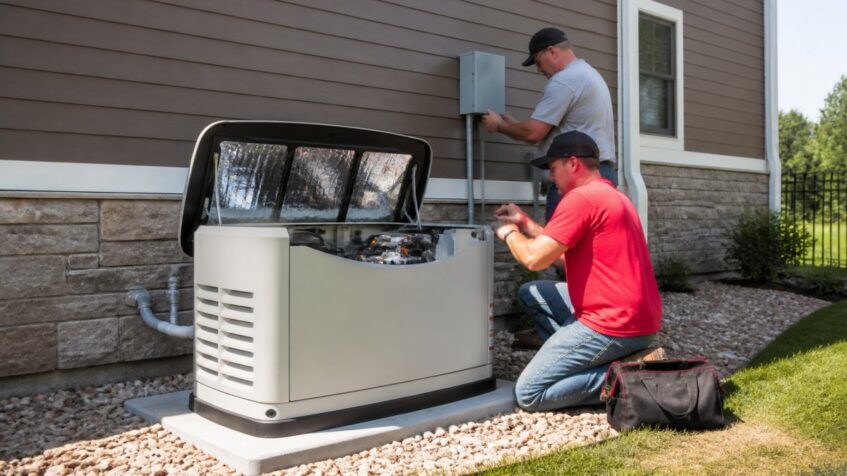
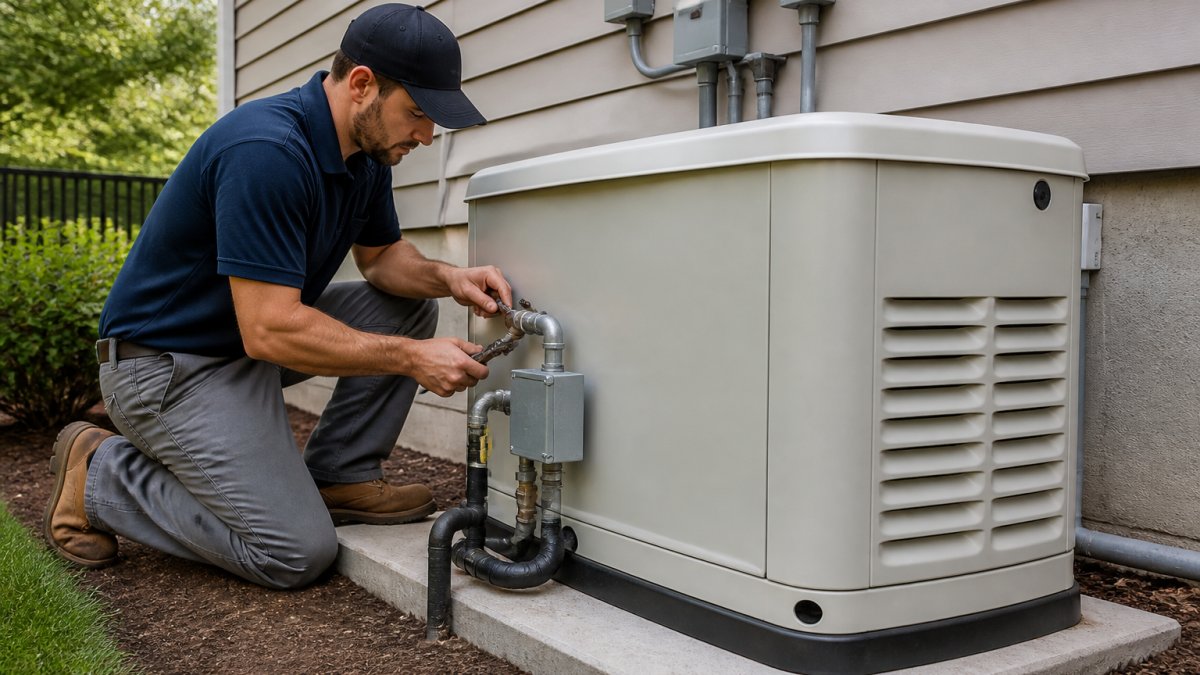
Professional electrician positioning a large standby generator unit on a concrete pad outside a residential home, with fuel line connections and exhaust piping visible in natural daylight
Before digging, locate underground utilities. Call 811 or your local utility locating service to mark gas lines, water pipes, and electrical conduits. This prevents dangerous accidents and costly repairs.
Fuel Supply and Exhaust Configuration
Your generator needs a reliable fuel source. Natural gas connections tap into your home’s existing gas line, while propane systems require a dedicated tank. Diesel units need their own storage tank with proper venting and safety features.
Fuel line installation must meet code requirements. Lines must be properly sized, protected from damage, and installed by a licensed professional. Propane tanks need specific setback distances from structures and property lines, typically 10 feet or more.
Exhaust piping directs dangerous combustion gases safely away from your home. The exhaust must vent upward and away from windows, doors, and air intakes. Improper exhaust routing creates carbon monoxide hazards and violates building codes.
Generator Transfer Switch Installation and Electrical Integration
The transfer switch is the critical component connecting your generator to your home’s electrical system. It automatically detects power loss and switches circuits to generator power within seconds.
Manual transfer switches require you to flip a lever when power fails. Automatic transfer switches detect the outage instantly and switch without user action. Automatic switches cost more but provide seamless backup power.
Mounting the switch near your main electrical panel
Running electrical conductors from the switch to the generator
Connecting selected circuits through the switch
Programming automatic switching parameters
Your electrician selects which circuits the generator will power. Critical circuits like refrigeration, heating, and lighting typically have priority. Non-essential circuits like electric water heaters or large appliances may be excluded to prevent overload.
Key Takeaway A properly installed transfer switch prevents backfeeding, electricity flowing back into utility lines where it could harm linemen working on downed power lines.
Permits, Inspections, and Code Compliance
Whole home generator installation requires permits in most jurisdictions. Permits ensure the work meets electrical code, building code, and safety standards. Your electrician typically handles permit applications and scheduling inspections.
The National Electrical Code (NEC) governs generator installations across the United States (Learn More About NFPA 70, National Electrical Code (NEC)). Local amendments may add additional requirements. Common code requirements include:
Proper grounding and bonding
Correct wire sizing for generator output
Transfer switch installation and labeling
Fuel line safety and ventilation
Exhaust piping clearances
Inspections occur at multiple stages. Initial inspections verify site preparation and foundation work. Rough-in inspections check electrical rough-in before walls close. Final inspections confirm all connections, labeling, and safety features meet code.
Never skip permits or inspections. Unpermitted work creates liability, insurance complications, and resale issues. It also voids manufacturer warranties and violates electrical code.
Common Mistakes to Avoid During Installation
Undersizing the generator is the most frequent error. Homeowners often choose units that barely cover essential loads, then discover they can’t run everything they need. Oversizing is less common but wastes money on equipment and fuel.
Poor site selection creates problems. Placing generators too close to windows or doors allows exhaust and noise to enter your home. Inadequate clearance restricts airflow and causes overheating.
Incorrect fuel line installation causes leaks, corrosion, and safety hazards. Lines must be properly sized, supported, and protected from damage. Propane connections require specific fittings and regular inspection.
Skipping the transfer switch creates serious hazards. Without proper switching, backfeed can electrocute utility workers. Improper switching also damages appliances and creates fire risks.
Neglecting permits and inspections invites code violations. Unpermitted installations may not be insured, may fail inspections during home sales, and create liability if something goes wrong.
Watch Out Never attempt generator installation yourself unless you’re a licensed electrician. Improper electrical connections create electrocution and fire hazards that endanger your family and neighbors.
Maintenance and Testing After Installation
Your generator requires regular maintenance to ensure reliable operation. Monthly testing involves running the generator under load for 10-15 minutes. This prevents fuel degradation, keeps seals lubricated, and identifies problems early.
Annual maintenance includes:
Oil and filter changes
Fuel system inspection and stabilization
Battery testing and replacement if needed
Air filter cleaning or replacement
Visual inspection for corrosion or damage
Keep detailed maintenance records. Document all service work, parts replaced, and test results. This documentation supports warranty claims and resale value.
Fuel type affects maintenance needs. Natural gas systems require less maintenance than propane or diesel units. Propane and diesel systems need fuel stabilization during storage periods to prevent gum buildup and corrosion.
Test your transfer switch quarterly by simulating a power loss. Most automatic switches have a test mode that verifies switching without actually disconnecting power. This confirms the system responds correctly when you need it.
Backup power protects your home when outages strike. A properly sized and installed whole home generator system provides peace of mind and keeps essential systems running. The installation process involves multiple trades, permits, and inspections, work that demands professional expertise.
Moser Electric brings over 21 years of experience to whole home generator installation throughout Moneta and the surrounding region. Our team handles complete installations from site assessment through final testing, ensuring your system meets code requirements and operates reliably. We prioritize transparent communication about costs, timelines, and what to expect at each stage. Request Service from Moser Electric and get expert guidance tailored to your home’s specific backup power needs.
Frequently Asked Questions
How much does whole home generator installation cost?
Installation costs depend on your home’s size, the generator’s capacity, fuel type, electrical panel upgrades needed, and local labor rates. Pricing varies significantly based on site conditions, existing infrastructure, and whether permits or additional foundation work are required. Contact Moser Electric for a detailed quote tailored to your specific installation needs.
How do I choose the right size whole-home generator for my house?
Calculate your home’s total electrical load by listing all appliances and systems you want to run during an outage. Consider peak demand (what runs simultaneously) versus total capacity. Most homes need 10-20 kilowatts for essential systems, while larger homes or those with central air conditioning may need 20-30 kilowatts or more. A professional assessment ensures you size correctly without overspending.
Do I need a permit to install a standby generator?
Yes. Most jurisdictions require permits for standby generator installation to ensure compliance with electrical codes, building codes, and safety standards. Permits typically involve inspections at multiple stages. Your electrician should handle permit applications and coordinate inspections with local authorities as part of the installation process.
How long does whole-home generator installation typically take?
Installation usually takes 2-5 days depending on complexity. Simple installations with existing electrical infrastructure may take 2-3 days, while homes requiring panel upgrades, foundation work, or fuel line extensions can take a week or longer. Your electrician will provide a timeline during the planning phase based on your specific situation.
We use cookies to ensure that we give you the best experience on our website. If you continue to use this site we will assume that you are happy with it.