Is Hiring an Electrician for a Dead Outlet Worth It?
14Nov
by kmoser
0
Last Updated: November 14, 2026
Quick Summary
Hiring an electrician for a dead outlet is usually worth it, because the cause often sits behind the wall in a loose connection, damaged wiring, or a failing panel. A diagnostic visit tells you which repair you actually need before you authorize work.
Test the outlet with a known-working device, check for a tripped breaker, press GFCI reset buttons, and flip wall switches first.
Stop and call a pro if you see scorch marks, smell burning, or feel heat at the outlet.
A dead outlet usually falls into one of five buckets, from a tripped GFCI to a panel issue.
Ask for the cause in writing so a bundled quote cannot hide whether you pay for a reset or a rewire.
Hire a licensed electrician for cracked, ungrounded, or discolored outlets and for homes with aluminum wiring.
Dead outlet? Here’s what to check first.Moser Electric diagnoses and repairs dead outlets across Moneta and Lynchburg, VA.
A dead outlet is one of the most common electrical complaints homeowners raise, and it is also one of the most frequently ignored. Homeowners often write off a single nonworking outlet as a minor annoyance, then plug a space heater into an extension cord across the room and forget about it.
Here is the uncomfortable truth most guides skip: a dead outlet is rarely just a dead outlet. The receptacle itself may have failed, or the problem may sit upstream in a loose connection, a tripped breaker, or wiring that has quietly degraded behind the drywall.
So is hiring an electrician for a dead outlet worth it? Usually, yes, but not always, and the difference comes down to what you find when you troubleshoot safely.
Dead Outlet Troubleshooting You Can Do Safely
Start with the simple, safe checks before you call anyone. Most dead outlet troubleshooting takes under ten minutes and requires no tools beyond a lamp or a small voltage tester.
Work through these in order:
Test the outlet with a known-working device. A lamp or phone charger that works elsewhere tells you the problem is the outlet, not your appliance.
Check for a tripped breaker. Open the electrical panel and look for a breaker that sits between ON and OFF, or one that has flipped fully. Reset it once. If it trips again immediately, stop and call a pro.
Look for a GFCI reset button. Outlets in kitchens, bathrooms, garages, and outdoors are often protected by a GFCI outlet upstream. Press the RESET button on any GFCI in the area; a tripped GFCI can kill power to several downstream receptacles.
Test the switch. Many outlets are controlled by a wall switch. Flip every switch in the room before assuming the receptacle has failed.
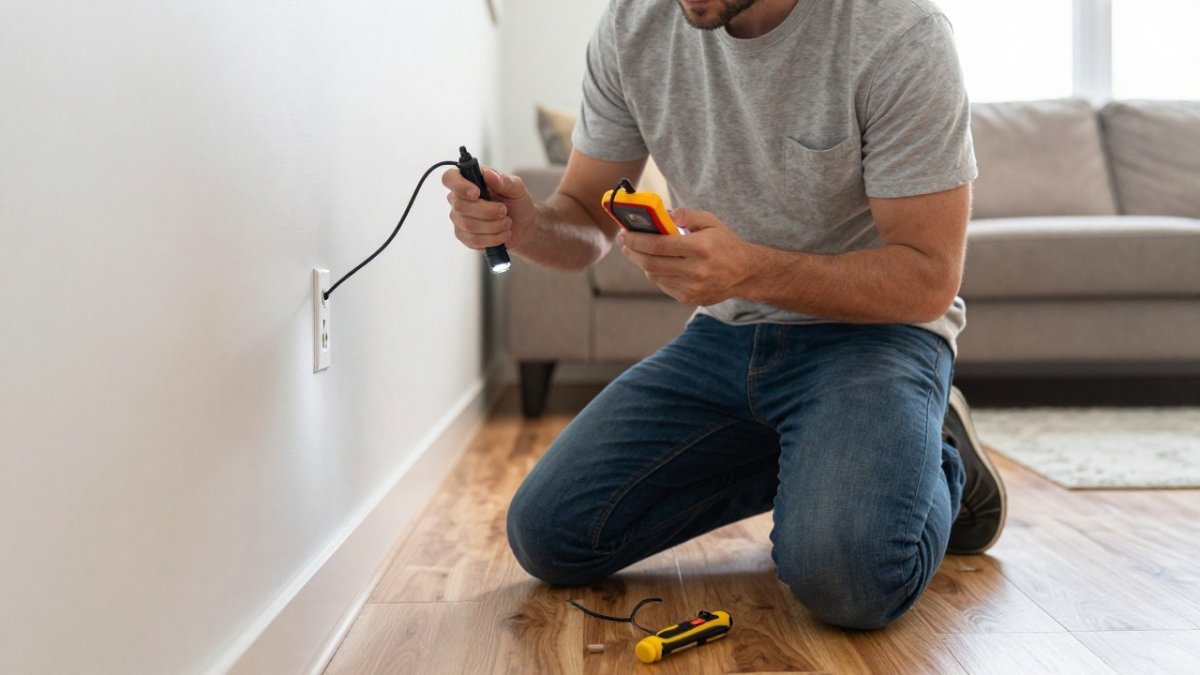
Homeowner using a voltage tester and flashlight to troubleshoot a dead outlet in a living room
What most guides miss is step three. A dead outlet in a bedroom can trace back to a tripped GFCI in the bathroom on the same circuit, and resetting it restores power in seconds. If all four checks come up empty, the problem lives behind the wall, and that is where DIY work should end.
Signs of Faulty Wiring That Mean Stop and Call a Pro
Some symptoms point to faulty wiring rather than a failed receptacle, and those are not DIY territory. Stop troubleshooting and call a licensed electrician if you notice any of the following:
A burning smell near the outlet or panel
Scorch marks, discoloration, or melted plastic on the receptacle
Sparks when you plug something in
The outlet or faceplate feels warm or hot to the touch
Flickering or dimming lights elsewhere in the house when the outlet is used
Frequent breaker trips on the same circuit
Buzzing or crackling sounds from the outlet or panel
Each of these signals points to heat, arcing, or a loose connection, and each one is a genuine fire hazard. The U.S. Fire Administration’s electrical fire guidance notes that home electrical fires cause significant injury and property loss every year, and faulty wiring and outlets are recurring culprits. Repeated dead outlets on the same circuit can also point to a failing panel, which is why we often recommend panel upgrades when the symptoms cluster. If your home has older wiring and you want to understand outlet safety devices, our team explains why kitchens and bathrooms need GFCI protection.
DIY vs. Professional Repair: A Side-by-Side Comparison
The honest answer is that DIY makes sense for diagnosis, not repair. Here is how the two paths compare.
Factor
DIY Troubleshooting
Professional Repair
What it covers
Breaker resets, GFCI resets, device testing
Diagnosis, wiring repair, outlet replacement
Tools required
Lamp, voltage tester
Meter, hand tools, code knowledge
Time
10-30 minutes
One service visit
Safety risk
Low if you stop at the panel
Low, handled by a trained electrician
Code compliance
Not addressed
Permits and code checks as needed
Best for
Confirming the problem exists
Fixing anything behind the wall
What the table cannot show is the decision you actually face once you know the cause. A dead outlet is not one repair; it is a fork in the road, and the right path depends on what the diagnosis finds:
Loose connection or failed receptacle. This is the best-case scenario for hiring a pro. The repair is targeted, the parts are inexpensive, and the visit pays for itself by removing a fire risk you cannot see.
Tripped GFCI that will not reset. Replacement of the GFCI device is usually the fix, and it is a code-relevant repair because GFCI protection is required in kitchens, bathrooms, garages, and outdoors.
Damaged wiring in the wall. This is where DIY stops being a money-saver. Opening drywall, repairing a conductor, and restoring the wall is a multi-trade job, and the cost of guessing wrong is a hidden splice that fails inspection or starts a fire.
Circuit or panel issue. A dead outlet that traces back to an overloaded circuit or a failing panel is a symptom of a system problem. Repairing the outlet alone will not fix it.
The risks of incorrect wiring are real: reversed polarity, loose terminations, and overloaded circuits are code violations that can void insurance claims and, worse, start fires. A common pattern is a homeowner who replaces a receptacle and creates a loose connection that heats up under load, which is why calling a licensed electrician for work behind the faceplate is generally advisable.
A handyman is appropriate for cosmetic work and for swapping a like-for-like device where local rules allow it, but a handyman is not the right call for diagnosing a circuit, repairing wiring, or pulling a permit. If your inspection suggests the problem runs through the whole house rather than one receptacle, it helps to understand what whole-house rewiring costs per square foot before you decide between targeted repair and a larger project.
Watch out: a cheap outlet swap that ignores the upstream cause can leave the real hazard in place. If the new outlet also goes dead, stop and get the circuit diagnosed.
What an Electrician Diagnostic Fee Actually Covers
An electrician diagnostic fee is the charge for identifying the cause of a problem, not just looking at it. Electrical contractors commonly charge a service-call or trip fee, and may apply that fee toward the repair or charge a separate diagnostic fee for tracing the circuit.
During a typical visit, the electrician will:
Test the outlet and trace the circuit back to the panel
Check for loose connections at the receptacle and any upstream outlets
Verify breaker and GFCI operation
Inspect for heat damage, arcing, and code violations
Explain the cause and give you repair options before work begins
What separates a good diagnostic visit from a wasted one is the decision criteria it produces. A dead outlet usually falls into one of five buckets, and each has a different repair path:
Tripped breaker or GFCI. The fix is a reset, and the value of the visit is confirming the circuit holds under load. If it trips again, the problem is downstream.
Failed receptacle. The outlet itself has worn out, cracked, or lost tension. Replacement is a small, well-defined repair.
Loose connection at the receptacle or upstream outlet. This is the most common hidden cause. A backstabbed or loosened termination can kill power to everything downstream and is a fire risk until it is re-terminated.
Damaged wiring in the wall. Rodent damage, nail strikes, or degraded insulation require opening the wall and repairing the conductor, which changes the scope and the price significantly.
Circuit or panel issue. A failing breaker, an overloaded circuit, or a panel problem means the dead outlet is a symptom, not the disease.
The diagnostic fee is worth it when it tells you which bucket you are in before you authorize repair. That distinction is what makes hiring an electrician for a dead outlet worth it in most cases: you are paying for certainty, not for a guess.
Watch out: a quote that bundles the diagnostic fee into a repair price without itemizing the diagnosis can hide whether you are paying for a reset or a rewire. Ask for the cause in writing.
When to Hire an Electrician to Replace Outlets
Outlet replacement is appropriate when the receptacle itself has failed, when it is old and ungrounded, or when it shows heat damage. That work involves cutting power at the panel, verifying the circuit is dead, and installing the new device to code, and it is not a job to improvise.
Hire a licensed electrician to replace outlets when:
The outlet is cracked, loose in the wall, or discolored
The receptacle is ungrounded or two-prong only
A GFCI will not reset or trips repeatedly
The outlet is in a wet location without GFCI protection
You are replacing outlets in a home with aluminum or older wiring
A residential electrician will also confirm whether a permit is required, which depends on the scope of work and local rules. If you have decided to bring in a pro, you can see our electrical repair services and book a visit. For homeowners searching for an electrician near me in the Moneta area, a local licensed contractor is the right call, not a general handyman.
Request Service from Moser Electric for Your Dead Outlet
A dead outlet is a small problem with an outsized range of causes, and the cost of delaying repair is rarely just inconvenience. Loose connections worsen, heat damage spreads, and a cheap fix today can turn into a panel replacement later.
Moser Electric provides electrical services for residential and commercial properties, with over 21 years of experience. Our team aims to treat your home or business as a respectful guest.
A dead outlet that keeps tripping, smells hot, or refuses to reset is not a wait-and-see problem.
Frequently Asked Questions
What should I check before calling an electrician about a dead outlet?
Before calling, check the circuit breaker for a tripped switch, press the reset button on any GFCI outlet nearby, and test the outlet with a lamp you know works. Also look for a switched receptacle controlled by a wall switch. If these steps do not restore power, the problem likely involves the wiring or the outlet itself, and a licensed electrician should diagnose it. Never remove the cover plate or probe inside the outlet yourself.
How much does an electrician diagnostic fee cost, and is it worth paying?
Diagnostic fees vary by contractor and region, so ask Moser Electric for current rates when you call. Paying for a professional diagnosis is often worth it, because a proper diagnosis helps prevent replacing a good outlet or missing a hidden fire hazard.
Can a dead outlet be a sign of a bigger electrical problem?
Yes. A single dead outlet can mean a loose connection at that receptacle, but it can also point to a tripped breaker, a faulty GFCI upstream, damaged wiring in the wall, or an overloaded circuit. If the outlet is warm, discolored, or smells like burning, stop using it and call a licensed electrician immediately. Signs of faulty wiring, such as flickering lights or frequent breaker trips, make a professional inspection more urgent.
Do I need a licensed electrician to replace a dead outlet, or can a handyman do it?
In most cases, a licensed electrician should replace a dead outlet, especially if the cause is unknown. Hiring a licensed electrician helps ensure the work meets code and that any underlying wiring issue is found. Ask Moser Electric about licensing and permits before work begins.
We use cookies to ensure that we give you the best experience on our website. If you continue to use this site we will assume that you are happy with it.